Reading population statistics

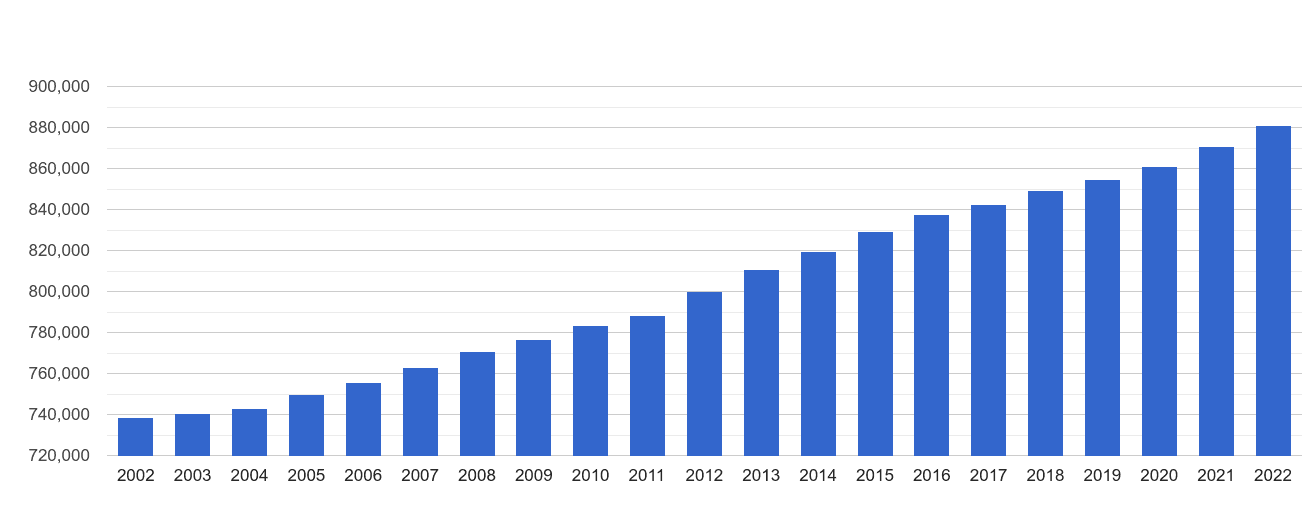
In 2024, there were 907k residents in Reading postcode area with an average age of 40.1 years. Population density was 475 residents per square kilometer. Population grew by 22.8% since 2002 and population average age increased by 2.9 years in the same period.
Key Population Data: Residents, Age and Density in 2024 (latest estimate from ONS)
Population EstimatesValue in 2024
Total residents907k
Average age 40.1
Population density475

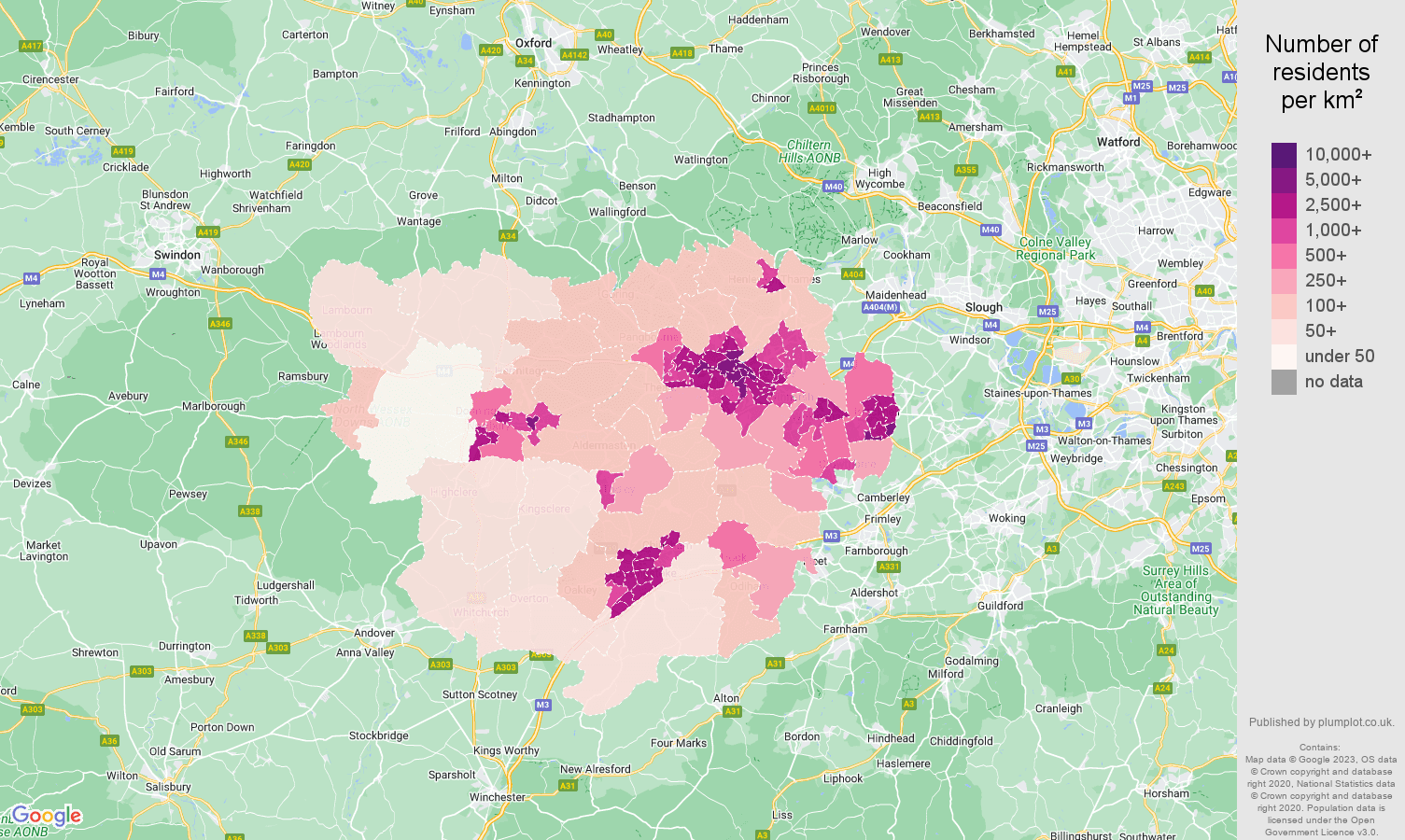
Reading population density map

shows a number of residents per square kilometer(km2), estimates from 2020.
Reading population density map

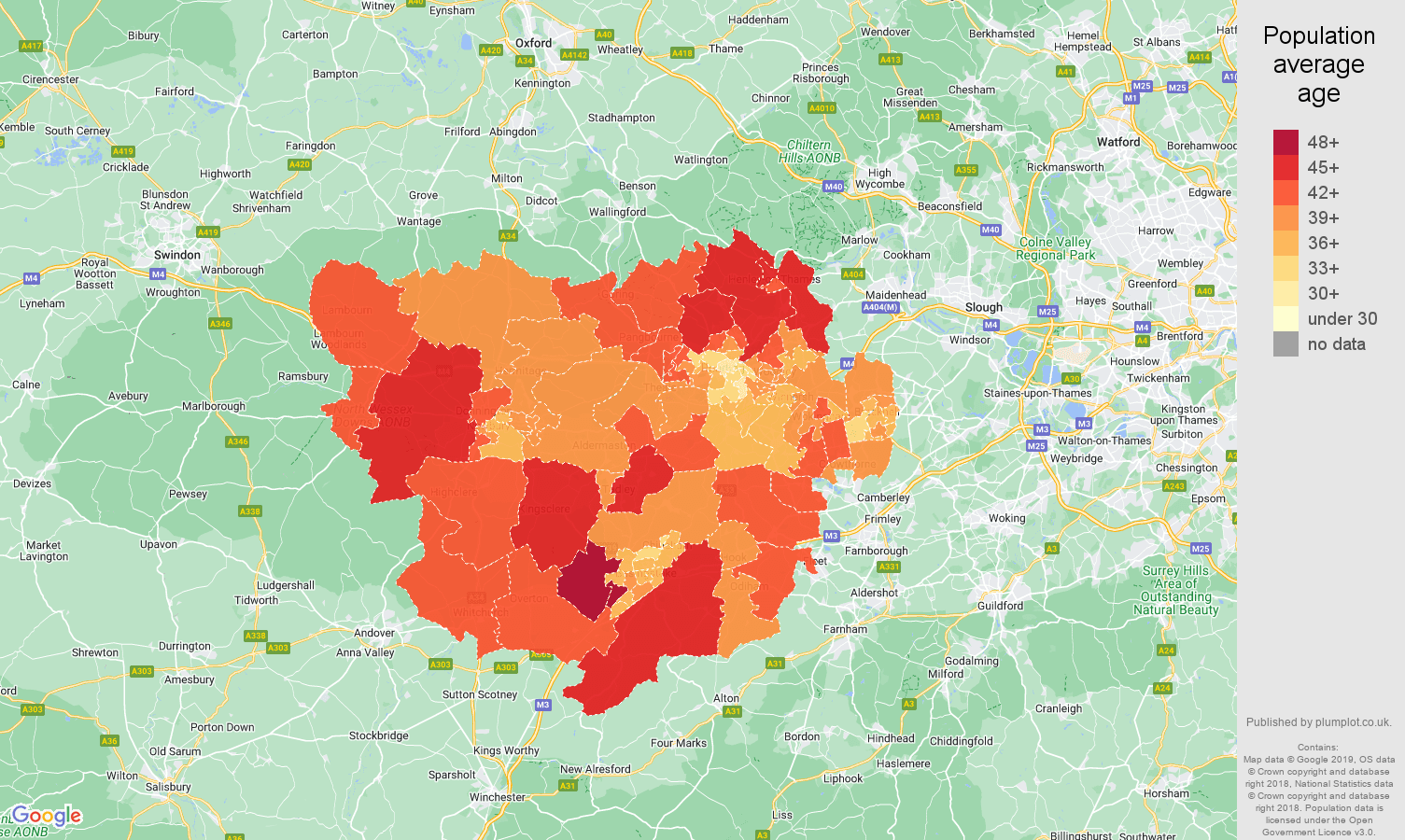
Reading population average age map

Population average age by LSOA (County) in 2018.
Reading population average age map

Reading population growth

Total population per year outlines headcount differences.
Reading population growth

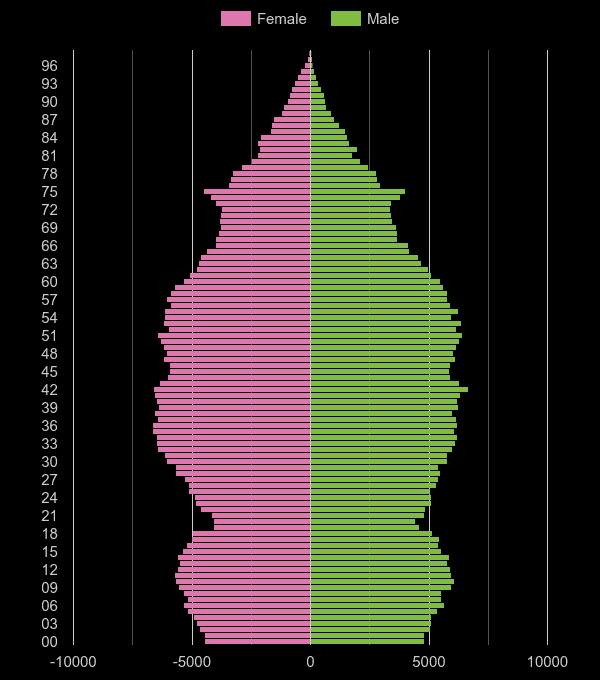
Reading population pyramid

shows the distribution of various age groups in a population in 2024. Females are shown on the left, males are shown on the right.
Reading population pyramid by year

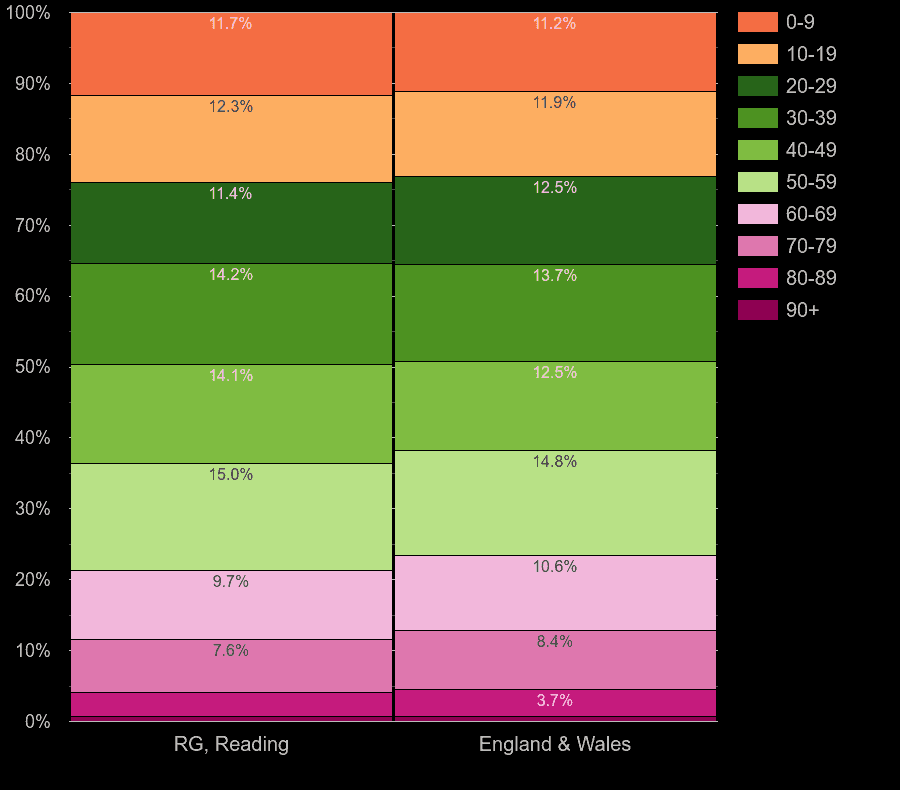
Reading population share by decade of age

Shares of population age groups compared to corresponding shares of population groups in England & Wales, 2024.
Reading population share by decade of age by year

Reading working age population share

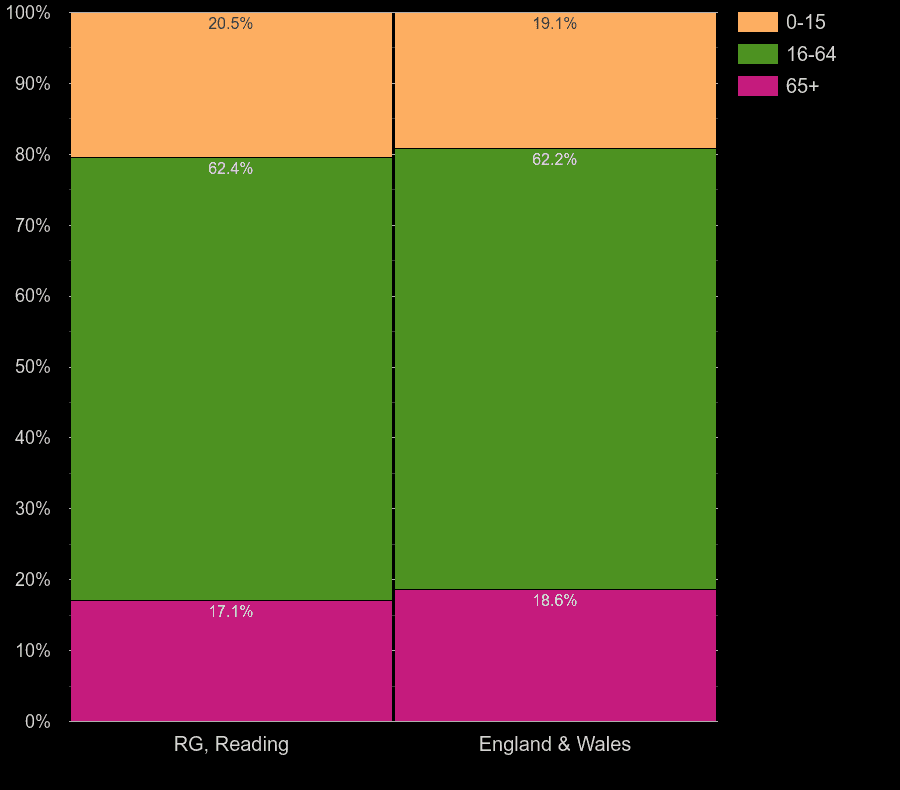
Working age population share compared to working age population share in England & Wales, 2024.

Reading working age population share
Age Distribution and Comparison to England & Wales
age grouphead-count% share of population% for Eng & Wales
0-15176k19.4%18.3%
16-64576k63.5%62.8%
65+156k17.2%18.9%

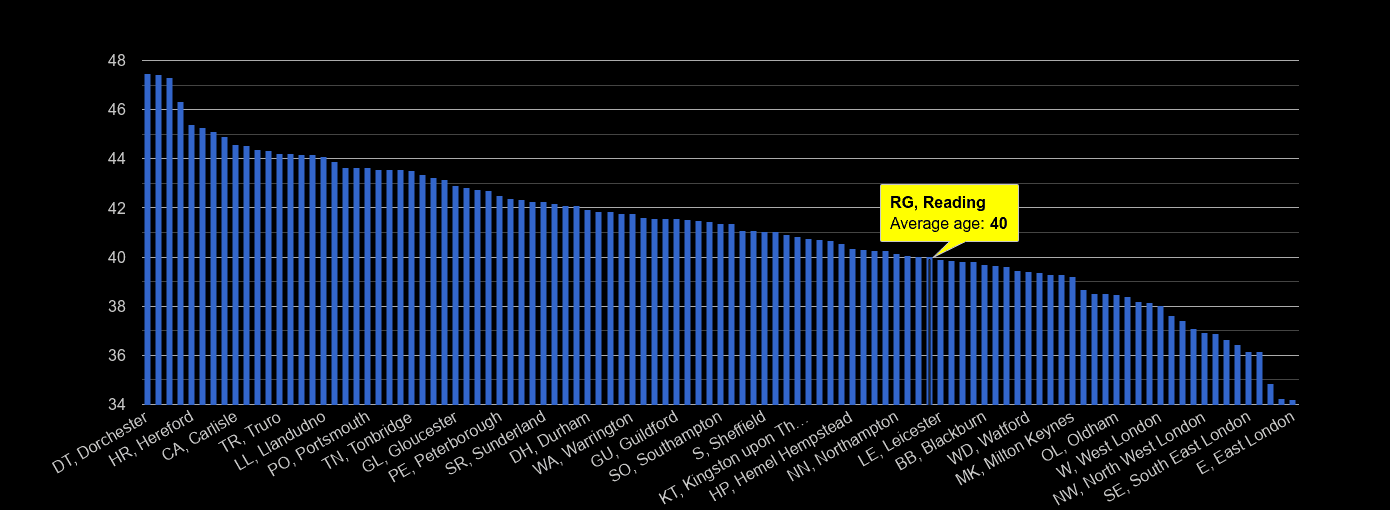
Reading average age rank

Comparison of postcode areas average ages, 2024 population estimates.
Reading average age rank by year

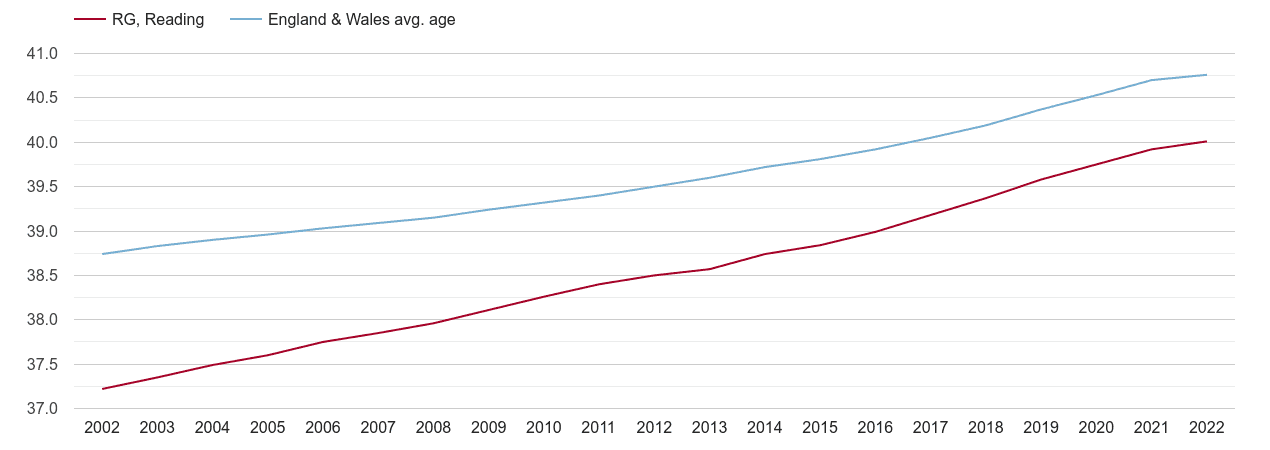
Average Age in Reading postcode area and Comparison to England & Wales
postcode areaAverage age in 2024
Reading40.1
England & Wales40.8

Reading population average age

Annual area statistics of Reading's population average age compared to country statistics.
Reading population average age by year

Reading residential areas map

Purple-colored areas are business or industrial areas. Green-colored areas provide quieter surroundings and better living. Map is based on a UK Census 2011 data. Colors calculated from the ratio of number of residents divided by a number of workday people.
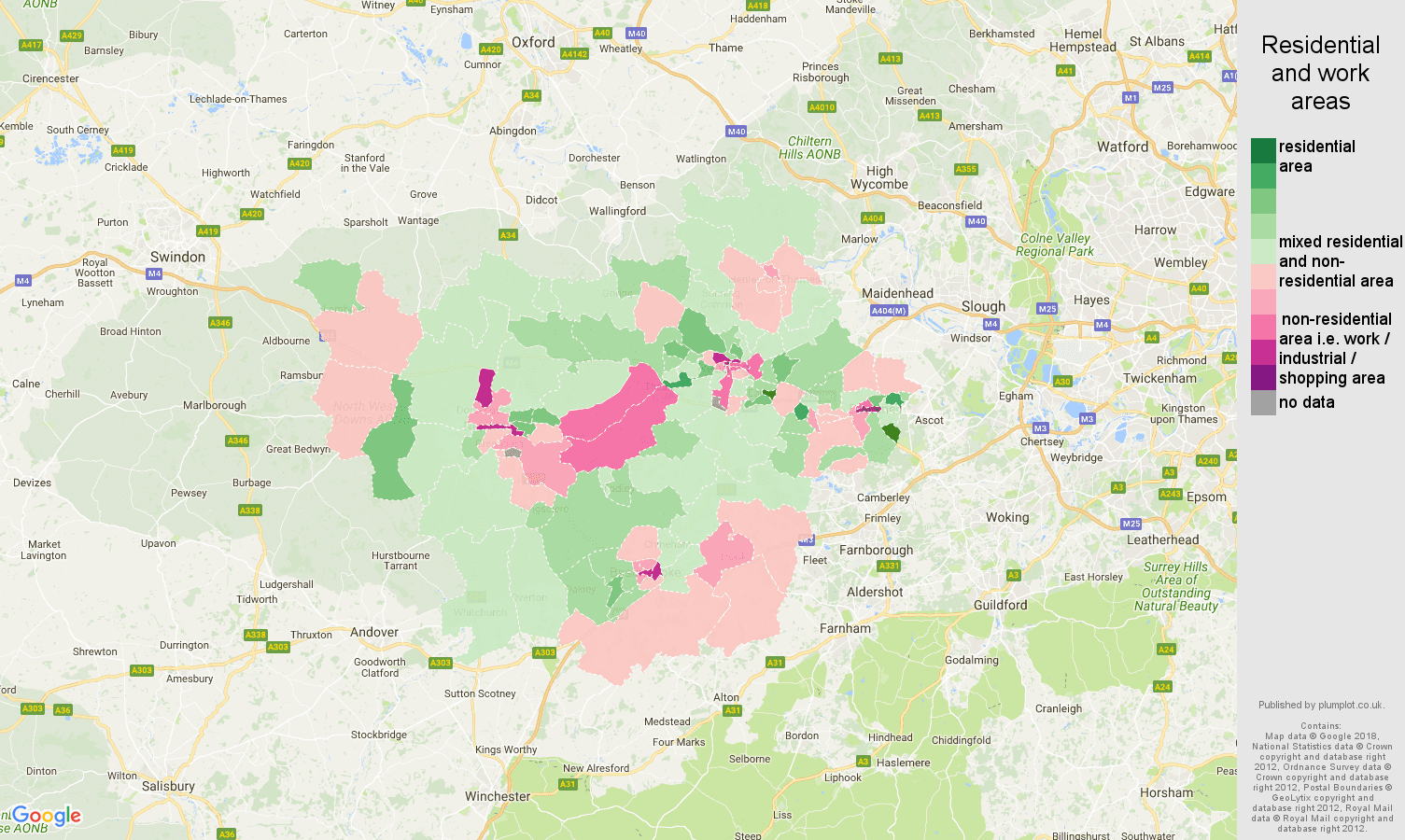
Reading residential areas map

Plumplot area insights - interactive charts and maps

Plumplot area insights - interactive maps and charts

Next for Reading postcode area

→ Population changes  

→ Census 2021  

→ Property prices  

→ Home energy efficiency  

→ Home features  

→ Crime statistics  

→ Energy costs  

→ Salary and unemployment  

Homeimage/svg+xmlhttps://openclipart.org/detail/170282/eco-green-house-icon-by-cybergedeondominiquechappard